Basic Research 1
iPSC for Modeling Underlying Cardiomyopathies

Chrishan Ramachandra, PhD.
National Heart Centre, SingaporeCardiomyopathies encompass a diverse group of disorders characterized by structural and functional abnormalities of the heart muscle, often leading to heart failure, arrhythmias, and significant morbidity and mortality. Among secondary causes, diabetes (DM)-induced cardiomyopathy is becoming increasingly prevalent due to the global rise in diabetes. Patients with DM cardiomyopathy tend to experience more adverse events, including higher rates of heart failure and hospitalization. Although multiple mechanisms contributing to this condition have been identified, effective therapies to improve clinical outcomes remain limited.
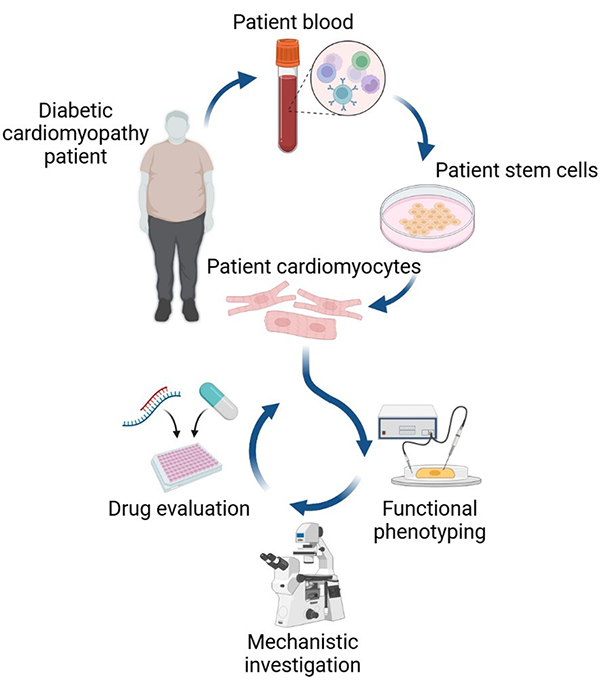
In our study, we aimed to model DM cardiomyopathy using induced pluripotent stem cells (iPSCs) derived from DM patients, and to investigate the effects and mechanisms of the SGLT2 inhibitor empagliflozin (EMPA). We recruited nine subjects: 3 healthy volunteers, 3 patients with DM but no signs of cardiomyopathy, and 3 patients with DM who exhibited clinical signs of cardiomyopathy and heart failure. iPSCs from all participants were differentiated into cardiomyocytes (CMs) and evaluated for differences across groups. Compared to controls, DM-CMs showed significant cellular hypertrophy, delayed calcium transients, slower contractility, reduced ATP production, and a distinct metabolic profile. Furthermore, when treated with EMPA, hypertrophy was not reversed, but calcium handling and contractile function improved, ATP levels increased, and abnormal metabolic signatures were normalized. These results highlight beneficial effects of EMPA at the cellular level beyond its glucose-lowering properties.
Cardiomyopathies are traditionally categorized as primary (genetic or intrinsic myocardial defects) or secondary (resulting from systemic diseases like diabetes). While iPSCs have been widely used to model genetic cardiomyopathies, their utility for secondary forms such as DM cardiomyopathy has been less clear. Here, we demonstrate that iPSCs can be used to model DM cardiomyopathy and uncover a novel mechanism of action of empagliflozin, positioning these patient-specific models as powerful tools to investigate human disease and identify new therapeutic targets.